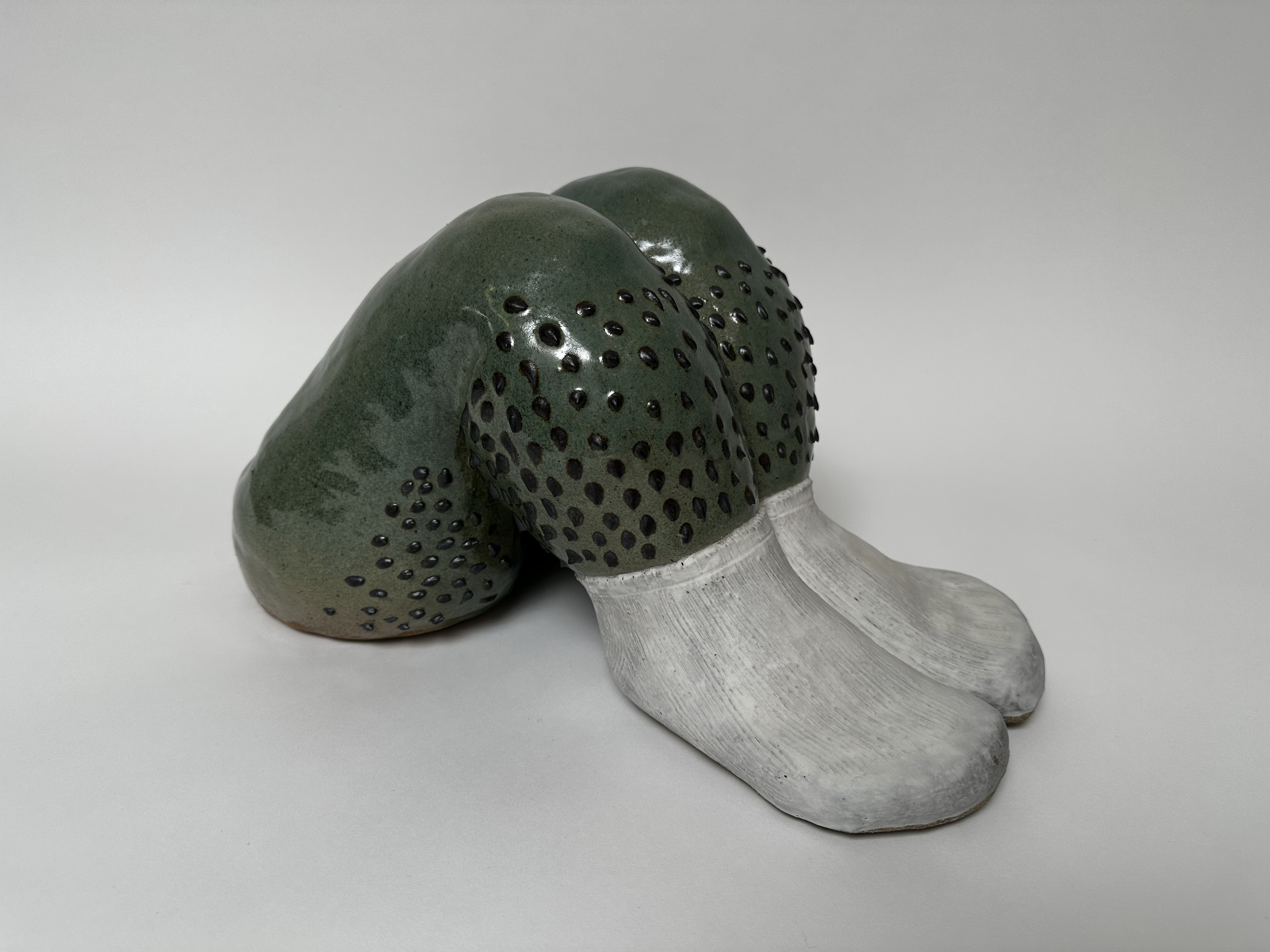
Although the work was not meant to be a self-portrait, I did use myself as a reference when sculpting the pair of legs. I’d like to imagine that in some way I carry a similar build to my relatives therefore this sculpture, loosely based on my own body, is how my ancestry expressed itself in me. The green glaze and black iron slip made body hair was intended to represent the color and thorns of a cactus; the socks keep this form tied to a more literal world, communicating the not-so separate relationship between humans and nature. The creation of this work was a practice in multi-generational healing, specifically relating to the idea that body hair was/is meant to be removed and the idea fat bodies are just as natural as any nuanced part of nature.
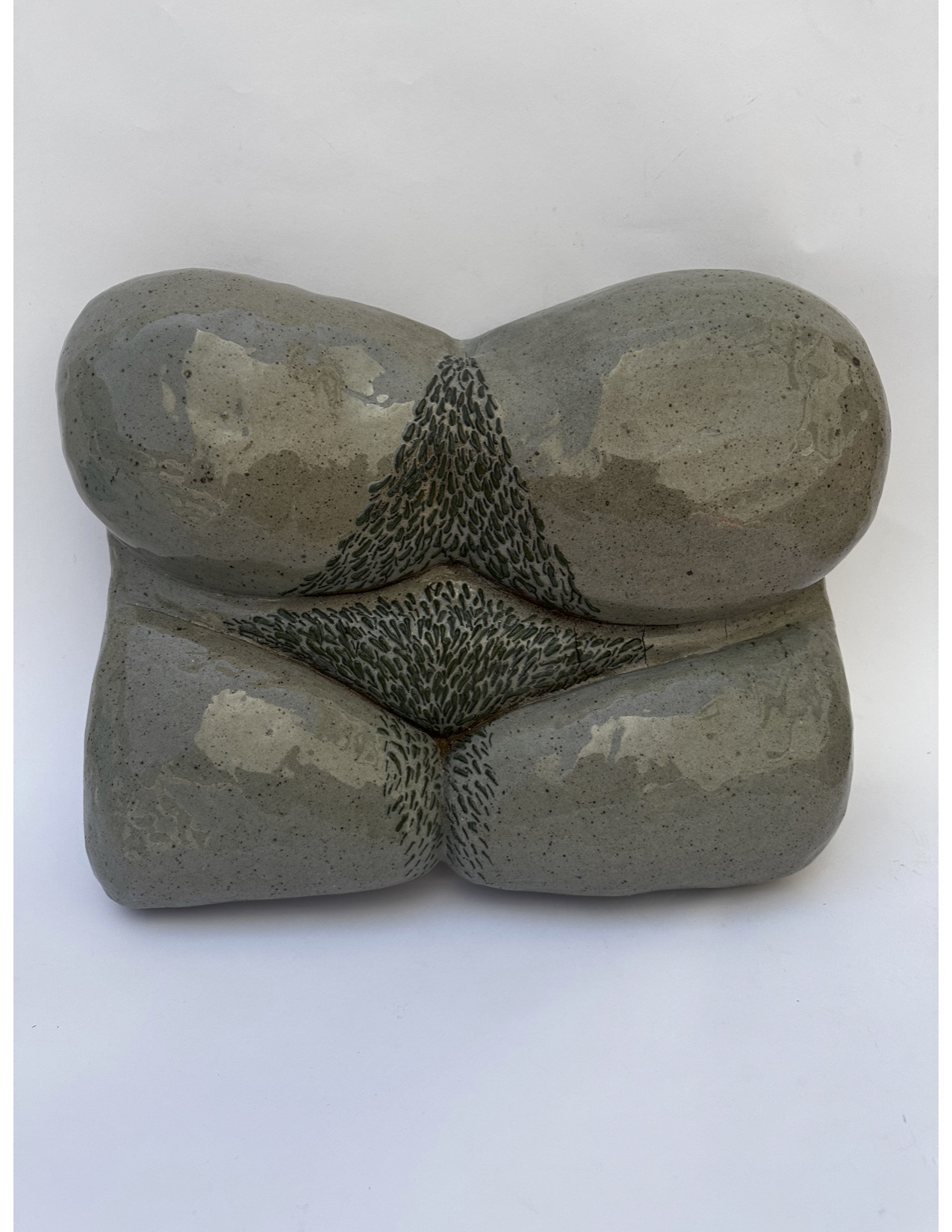
Fatty Upper Pubic Area, better known by the slang acronym, FUPA is a feature of many fat, AFAB bodies. My intention for this work was rooted in highlighting a body part that is sometimes tied to shame and embarrassment and simply letting it be. It is part of a collection of work that seeks to abstract the fat human body to be read as occurring in nature.
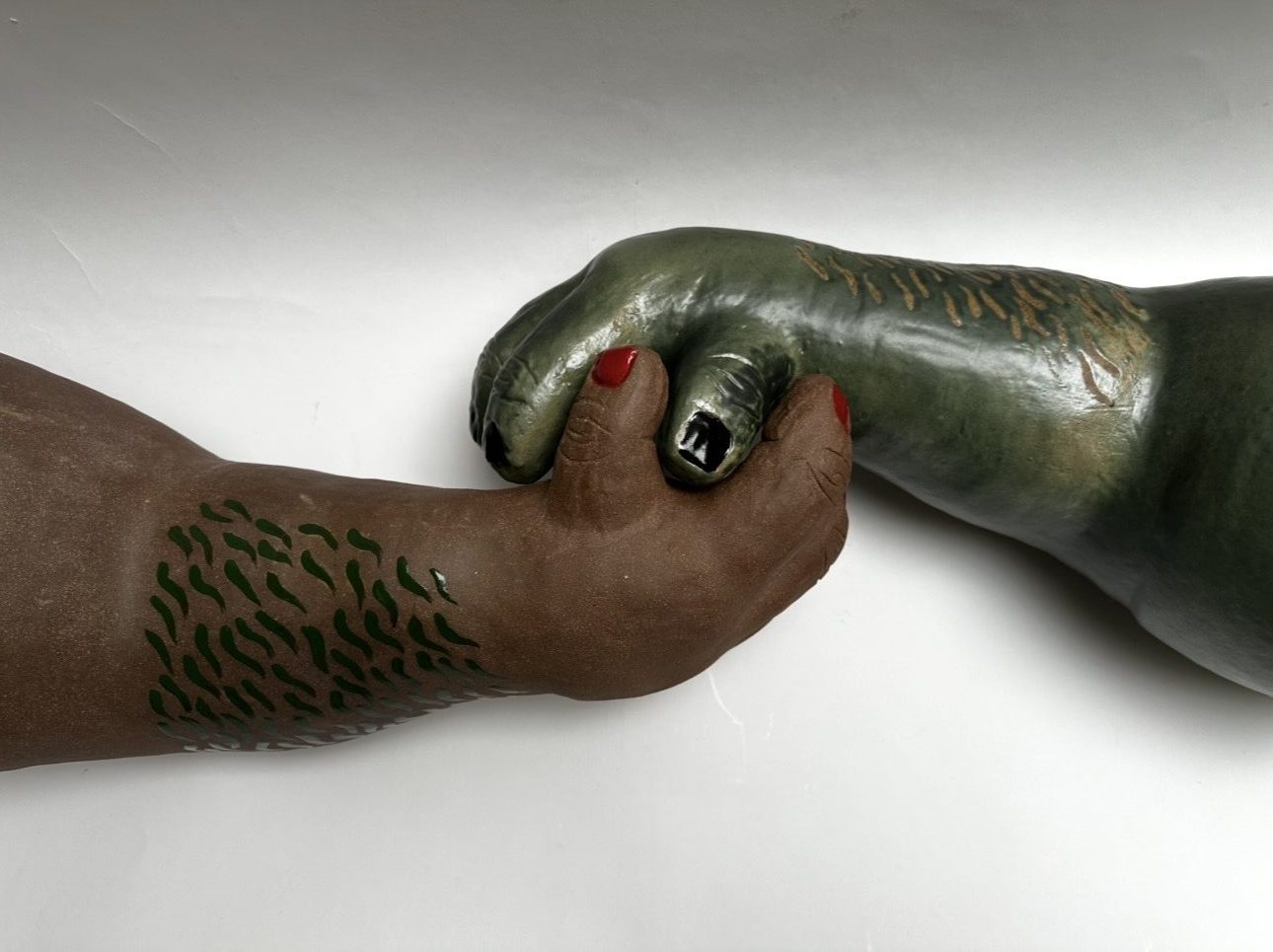
Another work made to explore human connection to nature, Fat Solidarity depicts two fat arms glazed to resemble part of the earth. Adorned with arm hair, they emphasize natural hair growth, inspired by the textures and patterns of flowing foliage/vegetation. The two arms are in a gesture of solidarity, hands clasped together united by their shared identity, communicating their commitment to each others well-being. Speaking to the undertones of fat liberation and land liberation that runs through my work, Fat Solidarity brings together the two forces that give my practice meaning. Because how they treat the Earth is how they treat our bodies.
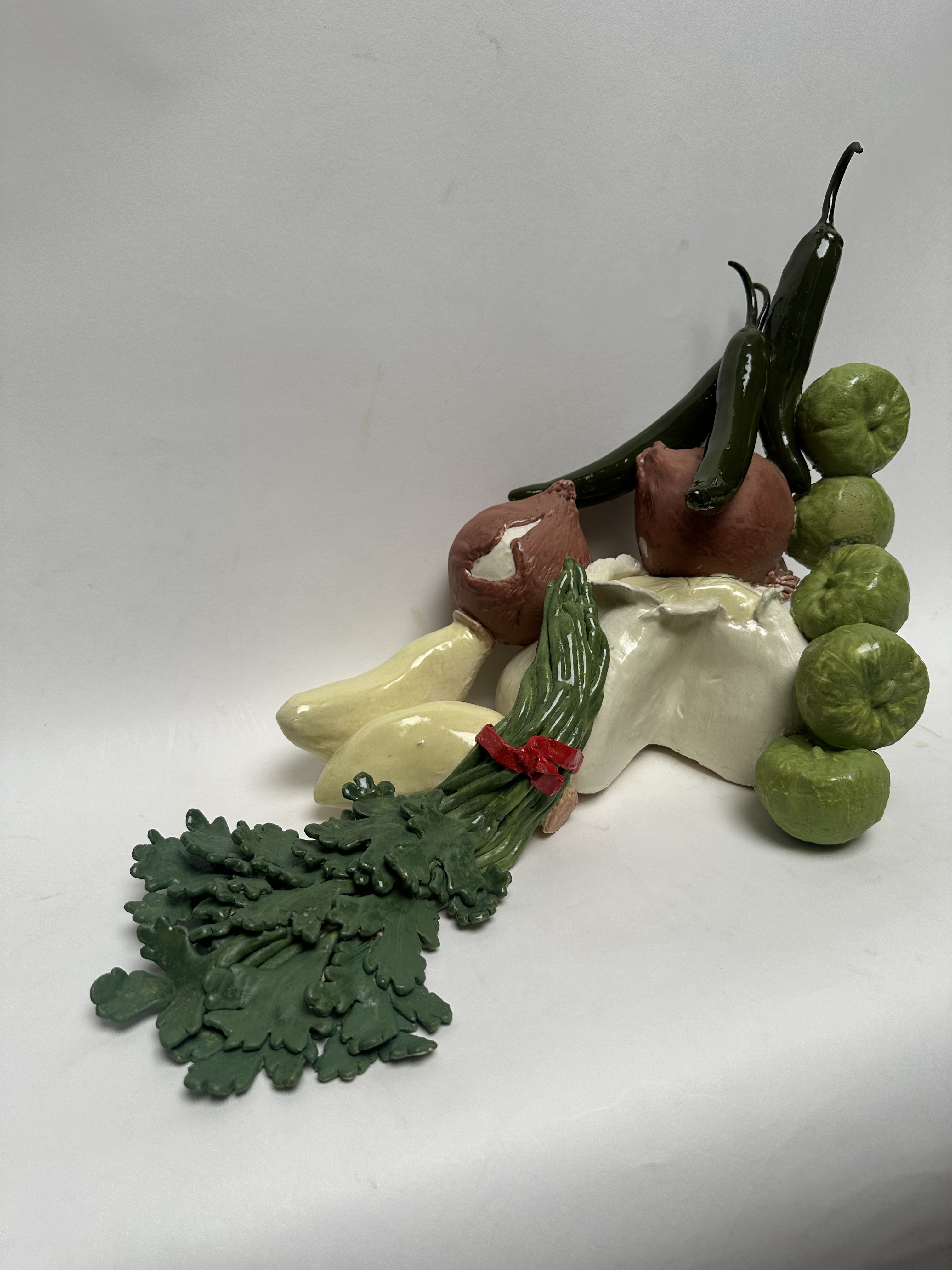
Staples of Sabor is a self-portrait assemblage of culturally significant produce in a Mexican kitchen. Cilantro, garlic, onions, and tomatillos are the foundation of a range of dishes in Mexican cooking. Cooking is one of the many ways I stay connected to my lineage as a first generation Mexican American. Using familiar ingredients is how I honor the traditions that sustained my ancestors, and keeping recipes alive is much like keeping a family member close. Granted I am missing a plethora of other items that make up Mexican cuisine, you could still make a yummy salsa from these ingredients alone. I hope to expand on this project by adding beans, roma tomatoes, bay leaves in the future.
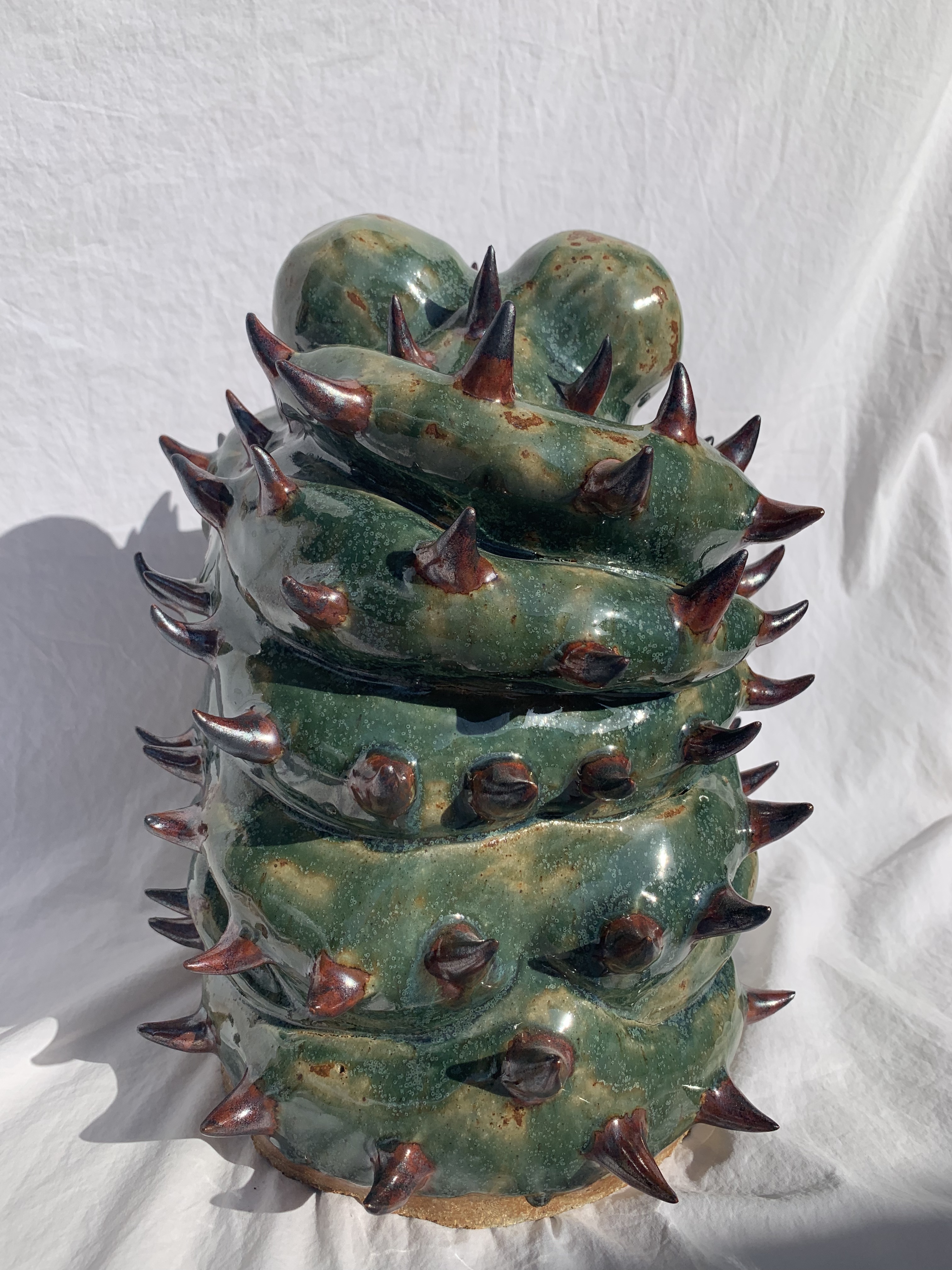
In a similar vein as, Peludx and what?, Sacred Embrace is a representation of the fat body abstracted. Specifically inspired by my romantic relationship with another fat person, Sacred Embrace is a tribute to the intimacy and healing I’ve felt in my partnership with another fat, queer and trans Mexican person. Taking on the shape of a cactus symbolizes the protectiveness I have over this connection, wishing to keep our shared experiences safe and held. I’m fat, Mexican and in love, and this work is the representation of that experience. Fat for fat relationships are a sacred connection to me in a world where fat people are looked at as undesirable; they’re proof that not only are we lovable, we are safe with one another.
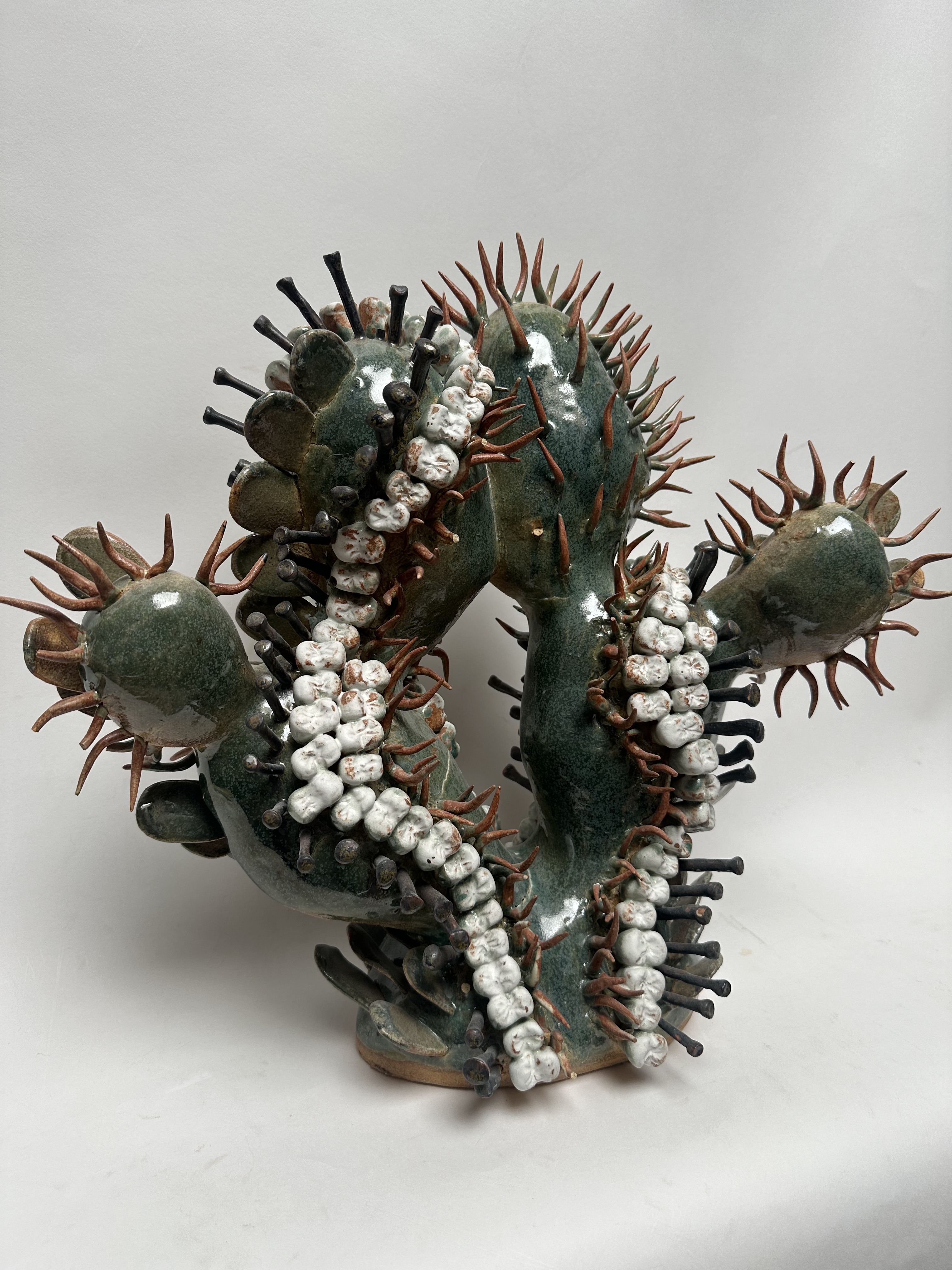
Based on the verb, ‘of nature’, this sculpture was inspired by the form of nopales (prickly pear cactus). True to the Mexican experience is the iconic relevance of the nopal in our culture. Being one of the many plants that I witnessed grown in my grandmother’s garden, the nopal is a plant relative that keeps me connected to my ancestors. To me it will always have a nostalgic, comforting presence due to its long standing importance in the Mexican diet and association with my grandmother. Embellished with thorns, molars, and nails, the sculpture is a symbol of determination and sacrifice. It took my grandmother more determination and sacrifice than I have ever known to immigrate from Mexico, and so, Of Nature, is a testament of how her choices gave way to my art making.